$ ls ~/runbooks
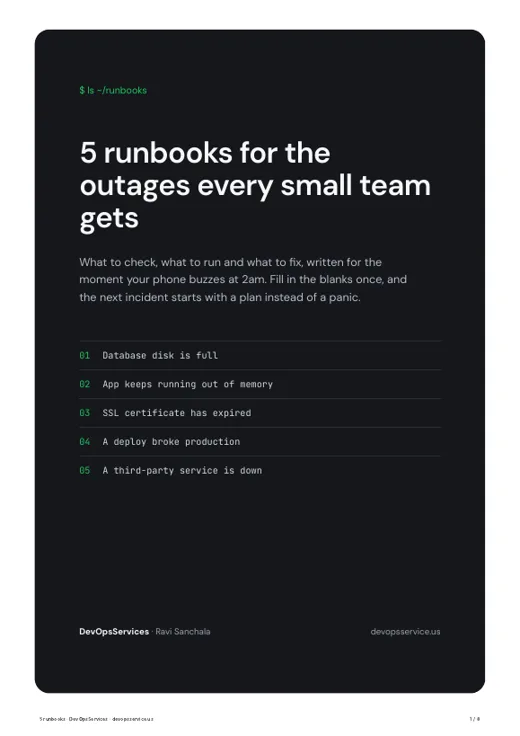
5 runbooks for the outages every small team gets
What to check, what to run and what to fix, written for the moment your phone buzzes at 2am. Fill in the blanks once, and the next incident starts with a plan instead of a panic.
- Free 8-page PDF
- Real commands, not theory
- AWS, GCP, Kubernetes and plain servers
// what’s inside
One page per outage, in the same order every time
Confirm the problem, stop the bleeding, find the cause, then prevent it next time. Each runbook has a box to fill in once for your setup: your dashboards, who can make changes, and which commands apply to you.
- 01 Database disk is fullAdd space safely first, then find the table, log or replication slot that filled it.
- 02 App keeps running out of memorySpot OOMKilled and exit code 137, buy time, then tell a leak from a spike.
- 03 SSL certificate has expiredCheck what is really being served, and renew it with certbot, ACM, cert-manager or Cloudflare.
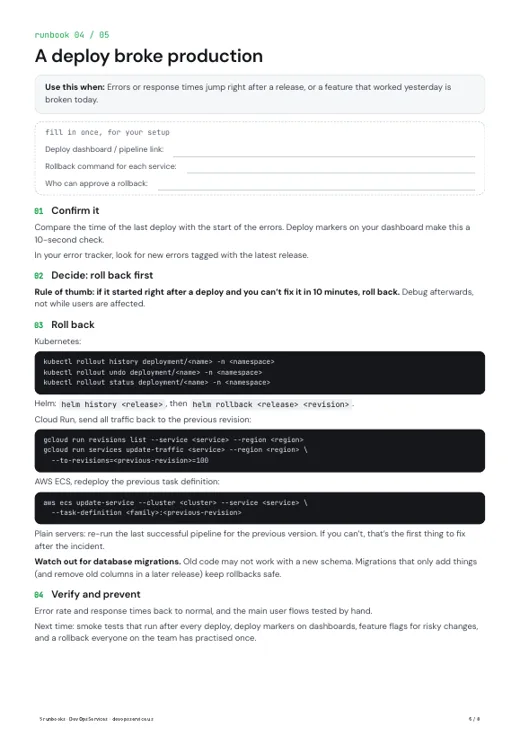
- 04 A deploy broke productionWhen to roll back, and the exact rollback for Kubernetes, Helm, Cloud Run, ECS and plain servers.
- 05 A third-party service is downFail fast, queue what can wait, and recover without double-charging anyone.
Plus a one-page guide to running any incident: who leads, where to talk and what to write down.
Rather not have the incidents at all?
Most outages in this pack come from the same few gaps: no alert until a customer complains, logs nobody can search, and deploys nobody can undo. I offer a free 30-minute review of your releases, infrastructure and alerting, with written findings you keep.